


4-minute read
C’est long longtemps dans les urgences du Québec
Le fait est que notre système de santé manque de capacité de traitement. Que vous vous présentiez en clinique externe, en salle d’urgence ou que vous ayez besoin d’une opération non-urgente, l’attente est un symptôme de ce manque de capacité.

6-minute read
ER Wait Times in Quebec Are Stagnating
The median patient visiting a Quebec emergency room last year spent 5 hours and 13 minutes there, according to this study published by the MEI. “This year again, Quebec patients have had to be patient indeed, with emergency room visits taking over five hours,” says Emmanuelle B. Faubert, economist at the MEI and author of the study.

IEDM – Trois conditions nécessaires au succès des mini-hôpitaux – Emmanuelle B. Faubert
February 6, 2024 | 18 min. 09 sec. | Marceau le midi (BLVD FM) Interview (in French) with Emmanuelle B. Faubert, Economist […]

6-minute read
The Mini-Hospitals Must Be Built on Solid Foundations
Activity-based funding and the inclusion of emergency rooms and operating rooms are crucial if the Quebec government’s independent mini-hospitals project is to be successful, points out this MEI study.

4-minute read
On health care, local decisions lead to better outcomes
By creating a number of smaller regional units, as opposed to a large conglomerated administrative structure, ideas for small changes are more easily applied and can potentially generate interest and awareness higher up the ladder.

9-minute read
The Nurse Shortage in Quebec: Improving Flexibility and Working Conditions
Quebec needs to improve flexibility and working conditions to keep young nurses in the profession, according to this study published by the MEI. “For every 100 nurses we train, 44 will leave the profession before their 35th birthday,” explains Emmanuelle B. Faubert, economist at the MEI and author of the publication.
Health Care in Canada 2023
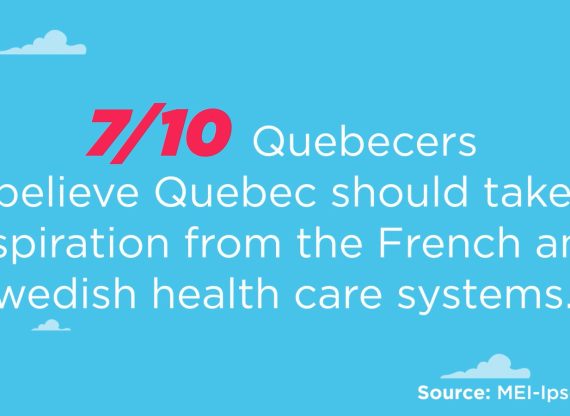
Our health care system is costly and inefficient, with long waits and backlogs. Mixed models like France’s and Sweden’s, which integrate private facilities within a universal system, deliver better outcomes and would allow more Quebecers to be treated faster.

IEDM – Le temps d’attente cause de plus en plus de décès – Gabriel Giguère
August 16, 2023 | 7 min. 24 sec. | Alexandre Dubé (QUB Radio) Interview (in French) with Gabriel Giguère, Public Policy Analyst […]

4-minute read
Why family doctors are leaving the Quebec healthcare system
Why are more Quebec family doctors leaving the government-run health system? Red tape and waiting lists push doctors out of Quebec healthcare and toward independent practice.

IEDM – Tendance préoccupante: les jeunes médecins fuient le système public – Célia Pinto Moreira
August 14, 2023 | 6 min. 26 sec. | Alexandre Dubé (QUB Radio) Interview (in French) with Célia Pinto Moreira, Public Policy […]